6
min read
After the Storm: The Real Work
A data-driven look at why post-storm recovery in American cities consistently falls short — and why comprehensive, timely documentation is the deciding factor between a swift recovery and a decade-long struggle.

Josie Cantrell
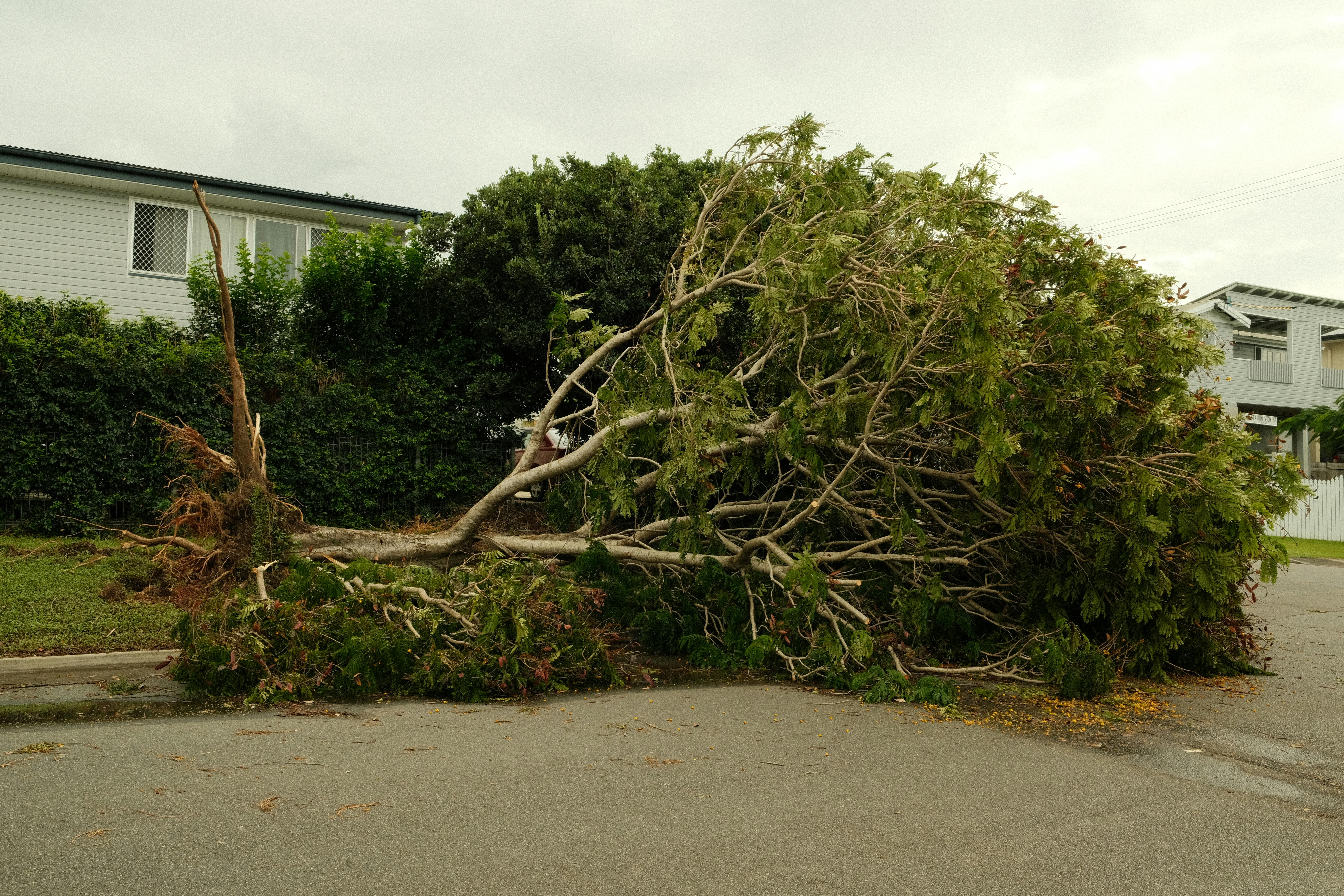
When a tornado, wildfire, or hurricane tears through a community, the images that dominate the news cycle are the most dramatic ones: flattened neighborhoods, charred hillsides, flooded streets. But the moment cameras pack up and move on, municipalities are left with something far harder to manage than a single catastrophic event; they're left with the long tail of recovery. And in most American cities, that tail is longer, more complicated, and more inequitable than anyone wants to admit.
The numbers tell part of the story. In 2025, the U.S. experienced 23 weather and climate disasters that each caused at least $1 billion in damage — the third-highest annual total on record, trailing only 2023 and 2024. Those events caused 276 fatalities and $115 billion in total damages. In 2025, a billion-dollar weather disaster struck the U.S. on average once every 10 days, marking the 15th consecutive year of above-average billion-dollar disasters. Since 1980, there have been 426 such disasters recorded in the United States, with a total cost exceeding $3.1 trillion.
The Damage You Can't See From the Street
One of the most persistent challenges in post-storm recovery is that the most dangerous damage is often the least visible. A tree through a roof is obvious. A compromised foundation, a clogged storm drain, a structurally weakened wall that still looks intact — these require systematic documentation to find, and most cities don't have the tools or staff to do it comprehensively.
After Hurricane Helene struck in September 2024, Greenville, SC faced exactly this challenge. More than 2,000 buildings in Greenville County sustained damage, including 1,300 with minor damage, 650 requiring extensive repairs, and more than 50 classified as a total loss. City officials had to rapidly document damage across the entire city, not just for residents' sake, but to comply with FEMA audit requirements necessary to unlock federal recovery funding. Traditional inspections, complaint-driven alerts, and scattered documentation couldn't keep up with the city's needs. Officials needed a complete, structured view to triage the damage and start allocating resources in order to accelerate recovery.
Greenville's story doesn't end there. It became a model for how municipalities can get ahead of this challenge before the next storm hits. Read the full Greenville case study →
This problem scales dramatically in larger disasters. After the 2011 EF-5 tornado in Joplin, Missouri, the storm damaged or destroyed 7,000 homes, 500 businesses, half of the school district, and the regional medical center, affecting 30% of the entire city. The sheer geographic breadth meant systematic, comprehensive documentation was the difference between effective recovery and years of patchwork fixes.
Three Types of Disasters, One Common Thread
Tornadoes: The Compressed Crisis
Tornadoes are uniquely brutal because they compress catastrophe into minutes. The Joplin tornado lasted 38 minutes on the ground, covered 22 miles, reached a mile in width, claimed 158 lives, and caused $2.8 billion in damage. What followed was a decade-long recovery that tested the city's institutions, its leaders, and its social fabric in ways no one anticipated.
Joplin's relative success in rebuilding was attributed in large part to allowing the voluntary and private sectors to lead response and recovery, rather than relying solely on federal and state coordination. Within the first year, the city received $39 million in recovery funds, and by 2014, 90% of destroyed homes and businesses had been replaced. But even in a best-case scenario, new construction required structural improvements, more steel to secure roofs to walls and walls to foundations, that became national building standards as a direct result of what Joplin revealed about vulnerability.
The lesson is clear: recovery from a tornado is not just about clearing debris. It demands a rigorous accounting of structural integrity across thousands of properties simultaneously.
Wildfires: The Recovery That Keeps Burning
Wildfires introduce a different kind of recovery challenge. The destruction is often total but the aftermath lingers in ways that aren't visible to the naked eye. Soil erosion, toxic ash contamination, compromised utility infrastructure, and the removal of fire-resistant vegetation all create secondary hazards that can persist for years.
The 2023 Lahaina wildfire on Maui was one of the deadliest in modern U.S. history, killing more than 100 people and destroying much of the historic town. Getting aid to displaced residents required rapid, accurate documentation of who lost what and ensuring that federal resources reached the right properties and the right people became a major logistical and equity challenge.
Among the most impactful 2025 disasters, the January 2025 Los Angeles wildfires subsequently became one of the costliest wildfire events ever recorded. Events of this scale overwhelm traditional inspection and documentation workflows, making comprehensive, technology-assisted property surveys not a luxury but an operational necessity.
Hurricanes and Flooding: The Inequity Amplifier
Hurricanes and flooding expose and amplify existing inequalities in ways that no other disaster type does quite as starkly. Among 2024's disasters, Hurricanes Helene and Milton together caused more than $100 billion in combined damage across Florida, Georgia, South Carolina, North Carolina, Tennessee, and Virginia, all within a two-week span in late September and early October.
The bureaucratic burden of recovery compounds this disparity. After Hurricane Sandy, New Jersey residents described their housing recovery process as inconsistent and difficult to navigate, with complex paperwork and rules that seemed to shift constantly. Residents who lack flexibility in their schedules, access to technology, or the ability to gather documentation face steeper climbs to the same finish line.
Tropical cyclones have caused the most damage of any disaster type since 1980 (over $1.5 trillion total) with an average cost of $23 billion per event. The gap between the scale of that risk and the readiness of most municipalities to document and respond to it is a recovery crisis waiting to happen.
Why Documentation Is the Unsung Hero of Recovery
Across all three disaster types, one factor consistently separates faster recoveries from slower ones: the quality of post-event documentation.
FEMA reimbursement, insurance claims, hazard mitigation grants, and community development block grants all depend on cities being able to demonstrate, with data, what was damaged, where, and to what degree. Cities that can produce comprehensive, defensible property-by-property records recover faster, secure more funding, and leave fewer residents behind.
FEMA's Hazard Mitigation Grant Program can be utilized up to 180 days after a disaster strikes, but accessing it requires documentation that many municipalities simply don't have the staffing or systems to collect quickly enough. 2025 is the 15th consecutive year of above-average billion-dollar disasters, meaning the window between one recovery and the next emergency is narrowing faster than ever. When a city is still processing documentation from one storm and another hits, the backlog can be devastating.
Recovery as a Continuous Responsibility
Post-storm recovery isn't a project with a clear end date. It's a continuous municipal responsibility that begins the moment the storm passes — and that requires the right tools, data, and documentation infrastructure to execute equitably and efficiently.
For city officials, code enforcement departments, and public works teams, the window between disaster and the expiration of federal funding timelines is narrow. The municipalities that close that window fastest are the ones that can deploy systematic, comprehensive property assessment without overwhelming their staff.
The stakes are too high , and the communities depending on swift recovery too vulnerable — to rely on sampling, guesswork, or windshield surveys alone.
Ready to see how City Detect helps municipalities prepare for and recover from major storm events? Contact our team today →
Sources
Climate Central — 2025 U.S. Billion-Dollar Weather and Climate Disasters (January 2026): https://www.climatecentral.org/climate-matters/2025-in-review (formerly NOAA's dataset, continued by Climate Central under the same lead scientist)
NOAA NCEI — Assessing the U.S. Climate in 2024 (February 28, 2025): https://www.ncei.noaa.gov/news/national-climate-202413
NOAA NCEI — Billion-Dollar Disasters State Summary: https://www.ncei.noaa.gov/access/billions/state-summary/US
City Detect — Greenville, SC Case Study: https://www.citydetect.com/case-studies/the-city-of-greenville-south-carolina
WSPA News — Greenville Releases Damage Assessment After Helene (October 2024): https://www.wspa.com/news/greenville-releases-damage-assessment-after-helene/
KCUR — Don't Do That! Joplin's Decade-Long Tornado Recovery Has Lessons for the Nation: https://www.kcur.org/news/2022-01-03/dont-do-that-joplins-decade-long-tornado-recovery-has-lessons-for-the-nation-about-surviving-trauma
The Invading Sea — The Millions of Americans Displaced by Tornadoes, Wildfires and Other Disasters: https://www.theinvadingsea.com/2025/06/05/disaster-recovery-tornados-fires-hurricanes-marginalized-communities-power-outages-resilience/
StateBook Insights — Data for Disaster Recovery (November 2024): https://statebookinsights.com/2024/11/04/data-for-disaster-recovery/