5
min read
How the 2026 World Cup Tests Code Enforcement & Public Works
6.5 million fans are descending on 16 host cities. Learn how the 2026 World Cup strains code enforcement and public works, and how AI helps cities keep up.

Josie Cantrell
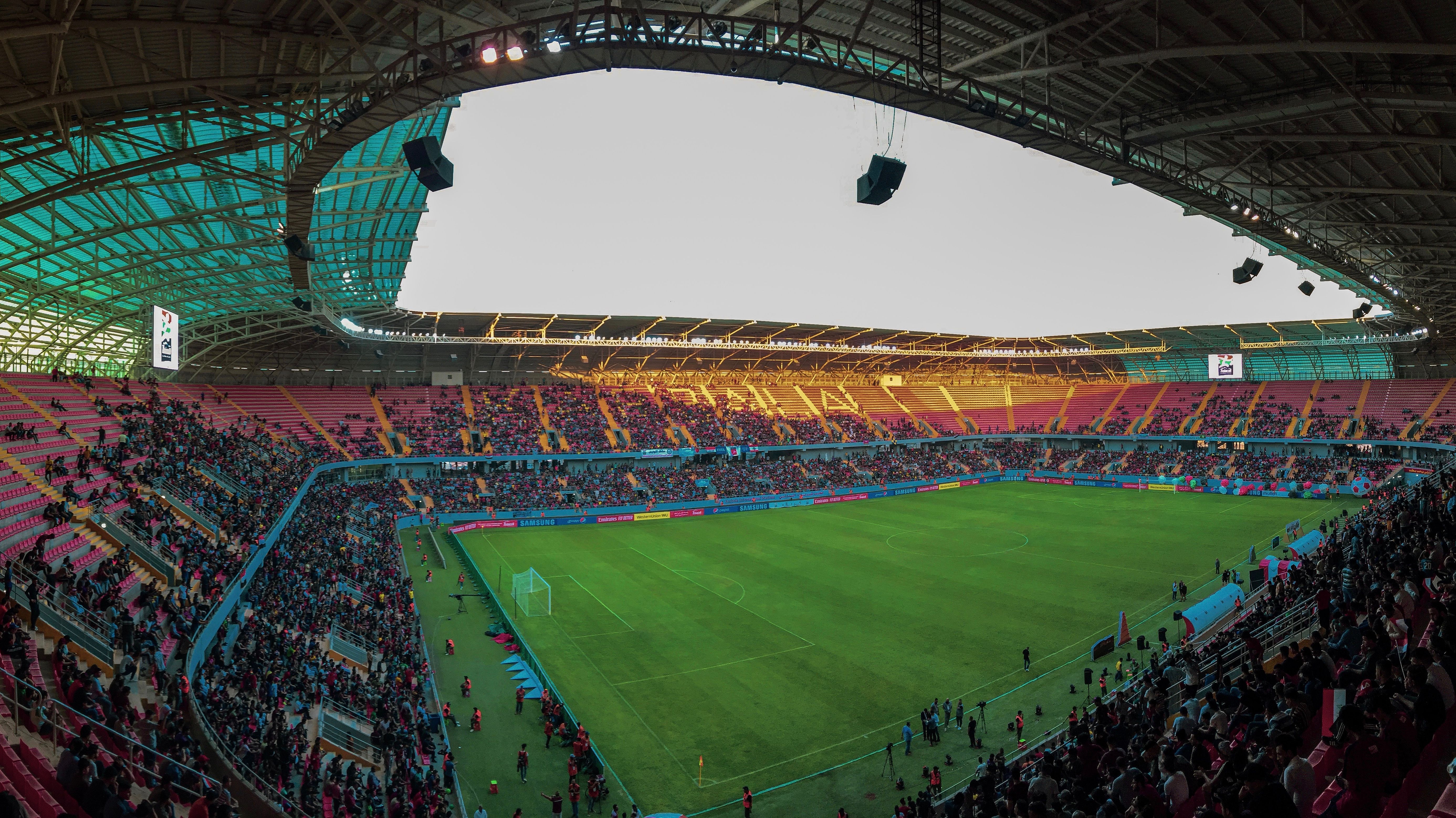
The biggest sporting event in history kicked off this week. In 2026, the FIFA World Cup spans three countries and 16 host cities for the first time, with 48 teams playing 104 matches over 39 days, according to FIFA. The FIFA–World Trade Organization socioeconomic impact study projects 6.5 million total attendees and an estimated $17.2 billion boost to U.S. GDP alone.
Most of the coverage focuses on stadiums, security, and transit. But for the people who actually run cities (city managers, code enforcement directors, and public works directors), the World Cup is something else entirely: a month-long, citywide stress test of every system responsible for how a community looks, functions, and feels.
This post looks at what the research and reporting tell us about how mega events impact code enforcement and public works, and how AI-powered tools like City Detect help cities prepare for the spotlight and recover after it.
Why Does the 2026 World Cup Matter for Local Government?
The scale is genuinely unprecedented. In 2026, eleven U.S. cities will host 78 of the tournament's 104 matches, and Tourism Economics estimates 1.2 million international visitors will travel to the U.S. for the event, as reported by CBS News. Individual metros are bracing for enormous surges: in 2026, the Kansas City region alone expects roughly 650,000 visitors and a projected $653 million in economic impact, according to Visit Kansas City figures cited by the Kansas Reflector.
Federal and host-committee money has followed. In 2026, Axios reported that U.S. host cities received $846 million through a new FIFA World Cup Grant Program, alongside $625 million in federal funding for safety and security and $100 million for transit operations. Cities like Atlanta and Seattle used the tournament as a forcing function for long-delayed capital projects. Seattle's Sound Transit described its decades-in-the-making Crosslake light rail line as a "we-must-have-this-open moment," per Marketplace.
But the majority of dollars flowing to stadium districts and transit lines don't reach the departments that handle overgrown lots, illegal dumping, graffiti, and dilapidated structures. Those teams are expected to deliver a world-class city appearance with the same staff and budget they had last year.
What Does FIFA Actually Require From Host Cities?
Hosting isn't just an honor; it's a contract. Host city agreements include explicit appearance obligations. As Prism Reports documented in 2026, the Los Angeles host city agreement requires the city to render public facilities and spaces "as attractive as possible" and to carry out beautification measures at its own expense.
That contractual language translates directly into work orders for code enforcement and public works: accelerated graffiti abatement, right-of-way cleanups, vacant property remediation, sign and banner enforcement, and corridor-by-corridor beautification along fan routes. Los Angeles institutionalized this with Shine LA, a recurring citywide cleanup initiative Mayor Karen Bass launched explicitly to prepare for the World Cup and the 2028 Olympics, as covered by CBS News.
City appearance has even become a national political talking point during this tournament cycle, with public debates over whether certain host cities have "cleaned up" enough. Whatever one's politics, the lesson for local leaders is the same: when a mega event arrives, the condition of your neighborhoods becomes front-page news.
How Do Mega Events Strain Code Enforcement?
Code enforcement departments feel mega events in three waves.
Before the event, cities compress years of deferred enforcement into months. Corridors that haven't been systematically surveyed since the last windshield survey suddenly need parcel-level condition data, fast. Manual windshield surveys are slow, inconsistent, and pull officers away from active caseloads precisely when caseloads are growing.
During the event, visitor density multiplies violations: overflowing commercial dumpsters, unpermitted vending and signage, short-term rental issues, noise, and trash accumulation in neighborhoods nowhere near the stadium. Research on host communities, including a 2022 systematic review in Frontiers in Sports and Active Living, also shows mega events concentrate enforcement pressure on vulnerable neighborhoods, which is exactly why cities need objective, consistent, citywide data rather than complaint-driven or discretionary targeting.
After the event, the surge recedes but the backlog doesn't. Cases opened during the push still need inspections, notices, hearings, and re-checks, while the regular complaint queue has been waiting.
We explored this dynamic in depth in our earlier post on mega events and urban transformation, which examined how Los Angeles saw illegal dumping service requests rise 450% between 2016 and 2020, with tonnage collected by city crews more than doubling, even before its current run of Super Bowl, World Cup, and Olympic hosting duties.
What Is the Public Works Burden Before, During, and After?
Public works departments carry a parallel load. Waste industry reporting from Waste360 has long documented the trash math of big events: a single Super Bowl can generate hundreds of tons of waste in a few days, and in 2023 Phoenix planned for roughly 2,000 tons of food waste from one Super Bowl weekend. Now multiply that across a 39-day tournament with fan festivals, watch parties, and pedestrian corridors in every host metro.
Beyond waste, public works teams own street and sidewalk condition, pothole and signage repair along fan routes, landscaping and median maintenance, storm response during peak summer weather, and rapid-turnaround graffiti and litter abatement. And as the Stateline reporting from March 2026 noted, economists warn that host cities frequently underestimate operating costs while overestimating returns, meaning departments are asked to do more without confidence that revenue will backfill the overtime.
The challenge isn't knowing that streets need attention. It's knowing which streets, which parcels, and which issues, at citywide scale, on a deadline.
The Hidden Challenge: Every Neighborhood Is on Camera
Tournament broadcasts don't stop at the stadium gates. Billions of viewers see B-roll of downtowns, transit corridors, and neighborhoods. Visitors post every block they walk. For five weeks, your city's curb appeal is a global media product.
That visibility cuts both ways. Done well, a mega event leaves a legacy of cleaner corridors, remediated properties, and better data about community conditions. Done poorly, it produces rushed, uneven enforcement that erodes community trust, along with a post-event hangover of unresolved blight.
The difference between those outcomes is almost always data: whether a city is making decisions from complete, current, objective information about property and roadside conditions, or reacting to complaints and headlines.
How Can AI and Computer Vision Help Cities Prepare for Mega Events?
This is the problem City Detect was built for. Our platform mounts cameras on vehicles your city already operates (garbage trucks, street sweepers, code vehicles) and uses AI and computer vision to detect, map, and track indicators of urban blight across every route those vehicles already drive. No new fleet, no added emissions, no army of temporary surveyors.
For mega-event preparation, that capability maps directly onto the three waves described above:
Baseline fast. Instead of months of manual windshield surveys, cities get parcel-level condition data citywide in weeks. In Stockton, California, City Detect analyzed 39,740 parcels and detected 13,852 unique issues from nearly 200,000 captured images. That's the kind of comprehensive baseline a host city needs to prioritize corridors before the cameras (the broadcast kind) arrive.
Monitor continuously. Because data collection rides along on routine fleet routes, conditions are re-observed continuously during the event itself. New dumping, graffiti, or accumulating trash shows up in the data without waiting for a 311 complaint, and detections can flow straight into your case management system.
Recover and document. After the final whistle, the same data shows what was resolved, what's new, and where the backlog actually is. Our Greenville, South Carolina storm recovery work, with 300 miles of affected roadway surveyed and roughly 1,200 high-severity damage indicators flagged, shows how quickly cities can assess conditions at scale when the pressure is on.
Just as important: objective, citywide data supports equitable enforcement. Every neighborhood gets observed the same way, which helps cities answer the legitimate concerns researchers raise about mega events concentrating enforcement on vulnerable communities. That commitment to transparency is core to our Responsible AI strategy.
What Comes After the Final Whistle?
The 2026 World Cup ends July 19. The mega-event era doesn't. The 2028 Olympic and Paralympic Games arrive in Los Angeles, America's 250th anniversary celebrations run all year, and host regions will spend the next decade competing for international matches, conventions, and major events on the strength of how 2026 went.
Cities that treat this summer as a one-off scramble will repeat the scramble in two years. Cities that use it to build a permanent, data-driven picture of community conditions will enter every future event, and every ordinary budget cycle, ahead.
Get Mega-Event Ready With City Detect
Whether your city is hosting matches this summer, absorbing spillover visitors, or eyeing the 2028 Games and beyond, the playbook is the same: baseline early, monitor continuously, enforce equitably, and document everything. City Detect helps code enforcement and public works teams do all four with the fleet and staff they already have.
Explore our solutions or contact us to see how AI-powered condition data can get your community ready for the world's attention.
Sources
FIFA & World Trade Organization, FIFA World Cup 2026 Socioeconomic Impact Analysis (OpenEconomics), https://digitalhub.fifa.com/m/152f754a8e1b3727/original/FIFA-World-Cup-2026-Socioeconomic-impact-analysis.pdf (retrieved 2026-06-11)
CBS News, "U.S. cities will see big tourism boost from World Cup, analysis predicts" (Tourism Economics data), https://www.cbsnews.com/news/world-cup-fifa-2026-tourism-us (retrieved 2026-06-11)
Kansas Reflector, "Kansas City area boosted infrastructure for FIFA World Cup. Now, the games begin." (June 10, 2026), https://kansasreflector.com/2026/06/10/kansas-city-area-boosted-infrastructure-for-fifa-world-cup-now-the-games-begin/ (retrieved 2026-06-11)
Axios, "How ready U.S. cities are for the World Cup" (June 3, 2026), https://www.axios.com/local/houston/2026/06/03/world-cup-host-cities-preparations (retrieved 2026-06-11)
Marketplace, "World Cup host cities push to complete public transit upgrades" (March 24, 2026), https://www.marketplace.org/story/2026/03/24/world-cup-host-cities-push-to-complete-public-transit-upgrades (retrieved 2026-06-11)
Stateline, "The World Cup is around the corner. Are cities and states prepared?" (March 31, 2026), https://stateline.org/2026/03/31/the-world-cup-is-around-the-corner-are-cities-and-states-prepared/ (retrieved 2026-06-11)
Prism Reports, "Activists against World Cup: 'Football belongs to the people'" (June 9, 2026), https://prismreports.org/2026/06/09/world-cup-gentrification-displacement/ (retrieved 2026-06-11)
CBS News Los Angeles, "Mayor Bass kicks off Shine LA clean up initiative with event in Hollywood," https://www.cbsnews.com/losangeles/news/mayor-karen-bass-shine-la-cleanup (retrieved 2026-06-11)
Rocha, C.M. & Xiao, Z., "Sport Mega-Events and Displacement of Host Community Residents: A Systematic Review," Frontiers in Sports and Active Living (2022), https://www.ncbi.nlm.nih.gov/pmc/articles/PMC8777052/ (retrieved 2026-06-11)
Waste360, "Big Events Mean Big Trash," https://www.waste360.com/industry-insights/big-events-mean-big-trash (retrieved 2026-06-11)
City Detect, "Mega Events and Urban Transformation," https://www.citydetect.com/blog/mega-events-and-urban-transformation (retrieved 2026-06-11)